
Eventbrite Alternative: Run Your Own Self-Hosted Event Management Platform
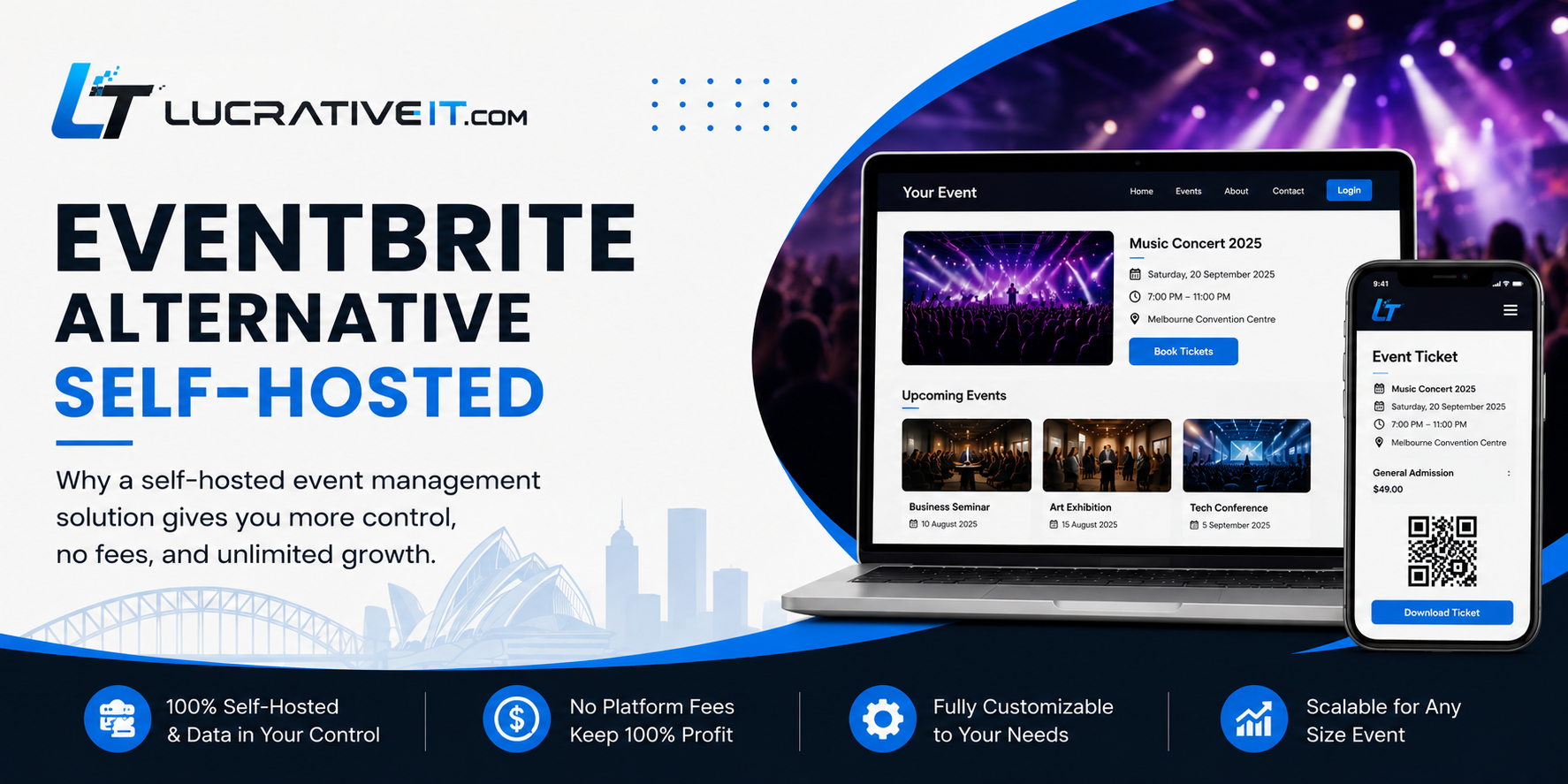
Tired of Eventbrite's per-ticket fees eating into your margins? Here's how a self-hosted event management platform gives you full ownership of your data, your branding, and your revenue — with no recurring commission on every ticket you sell.
If you run events regularly — conferences, workshops, meetups, concerts, or ticketed classes — you've probably felt the sting of Eventbrite's fee structure. Between service fees, payment processing fees, and the percentage cut on every ticket sold, a platform that was supposed to make your life easier starts to feel like a silent partner in your business. This is exactly why so many organizers are now searching for an Eventbrite alternative self-hosted on their own infrastructure, where they own the code, the database, and every dollar of ticket revenue.
In this guide, we'll break down what a self-hosted event management platform actually is, why it beats SaaS ticketing tools for growing organizers, what features to look for, and how to get started — without needing a development team.
Why Organizers Are Leaving Eventbrite
Short answer: Eventbrite charges a service fee plus a payment-processing fee on every paid ticket, which compounds quickly at scale. A self-hosted alternative replaces that recurring commission with a one-time software cost, giving organizers full control over pricing, branding, and attendee data.
Eventbrite's pricing model is built around taking a cut of your ticket sales. For a single small event that might feel negligible. But for organizers running dozens of events a year, those fees add up to thousands of dollars that could have gone back into the event itself, marketing, or your bottom line. Beyond the cost, there are three recurring complaints that push organizers toward self-hosted software:
- No data ownership. Attendee emails, purchase history, and behavioral data all live on Eventbrite's servers, not yours — making it hard to build a real CRM relationship with your audience.
- Limited branding. Your event page carries Eventbrite's URL, logo, and design language, diluting your own brand identity at the exact moment you're trying to build trust with a new attendee.
- Feature lock-in. Custom registration flows, membership tiers, or integrations with your existing CRM often require expensive add-ons or aren't possible at all.
What Is a Self-Hosted Event Management Platform?
A self-hosted event management platform is software you install on your own server or hosting account — instead of renting access to someone else's SaaS platform. You purchase (usually as a one-time license) a script or plugin, install it on your domain, and from that point on the platform, the data, and the revenue belong entirely to you.
Most self-hosted event platforms fall into two categories:
WordPress Event Plugins
Installed on an existing WordPress site. Ideal if you already manage content, membership, or e-commerce through WordPress and want ticketing built directly into that ecosystem.
Standalone Laravel / PHP Scripts
A dedicated event booking application with its own admin dashboard, database, and front end — built for organizers who want a purpose-built platform rather than a plugin bolted onto a CMS.
Both approaches remove the per-ticket commission that defines SaaS platforms like Eventbrite, and both give you access to the source code, meaning you (or a developer you hire) can customize the checkout flow, add payment gateways, or connect it to your existing marketing stack.
Must-Have Features in a Self-Hosted Ticketing Script
Not every self-hosted platform is created equal. Before you commit to a script or plugin, confirm it covers these essentials:
A script that checks all of these boxes essentially replicates — and in some cases exceeds — what Eventbrite offers, minus the ongoing commission.
WordPress Plugin vs. Standalone Laravel Script: Which Should You Choose?
The right choice depends on where you're starting from. If you're already running a WordPress site for your business, blog, or membership community, a WordPress-native event/booking plugin lets you add ticketing without spinning up a second platform to manage. You keep one login, one theme, one hosting bill.
If you're building a dedicated events brand — a ticketing marketplace, a multi-organizer platform, or a product you plan to white-label for clients — a standalone Laravel script gives you a cleaner architecture, dedicated admin panel, and more flexibility for deep customization or scaling into a SaaS product of your own.
Cost Comparison: Eventbrite Fees vs. a One-Time License
| Factor | Eventbrite (SaaS) | Self-Hosted Script |
|---|---|---|
| Pricing model | Per-ticket service fee + payment fee | One-time license (plus your own hosting) |
| Data ownership | Stored on Eventbrite's servers | Stored on your own server/database |
| Branding | Eventbrite domain & UI | Fully white-labeled, your domain |
| Customization | Limited to platform features | Full source-code access |
| Cost at scale (100+ events/yr) | Grows linearly with ticket volume | Fixed — no per-ticket cut |
The breakeven point varies by ticket price and volume, but most organizers selling more than a few hundred paid tickets a year recover the cost of a self-hosted script well within the first event season — and every ticket after that is pure savings compared to a commission-based platform.
How to Migrate From Eventbrite to a Self-Hosted Platform
- Export your data. Download your attendee lists, past event details, and sales history from Eventbrite's reporting dashboard before you cancel or downgrade.
- Choose your platform type. Decide between a WordPress plugin (if you already run WordPress) or a standalone script based on your technical setup and growth plans.
- Set up hosting and install. Most self-hosted event scripts install in minutes on standard shared or cloud hosting — no dedicated dev team required for a basic setup.
- Recreate your event pages and branding. Import your logo, color scheme, and event descriptions so your new booking page matches your brand identity.
- Connect payments and test checkout. Configure Stripe/PayPal, run a test transaction, and confirm QR/ticket delivery works end to end before your next live event.
- Redirect and announce. Point your marketing links to the new event page and let your audience know where to book going forward.
Frequently Asked Questions
Is there a good self-hosted alternative to Eventbrite?
Yes. Self-hosted WordPress event plugins and standalone Laravel/PHP ticketing scripts replicate Eventbrite's core features — ticket sales, QR check-in, coupons, and multi-organizer support — while removing the recurring per-ticket commission and giving you full ownership of attendee data.
How much does a self-hosted event platform cost compared to Eventbrite?
Self-hosted platforms typically use a one-time license fee plus your own hosting costs, instead of Eventbrite's ongoing service and payment processing fees on every ticket. For organizers selling a moderate-to-high volume of tickets annually, the one-time cost is usually recovered within the first event cycle.
Do I need a developer to set up a self-hosted event script?
Not necessarily. Most modern self-hosted event scripts are designed for one-click installation on standard hosting, with visual admin dashboards for managing events, tickets, and payments. A developer is only needed if you want deep custom features beyond what's included out of the box.
Can a self-hosted platform handle recurring or multi-day events?
Yes, most established self-hosted event scripts support recurring events, multi-session conferences, and tiered ticket pricing, matching or exceeding what SaaS platforms like Eventbrite offer.
Is self-hosted event software secure?
Security depends on your hosting environment and how well the software is maintained, the same as any web application. Choosing a script with regular updates, secure payment gateway integrations, and following standard hosting security practices (SSL, backups, updates) keeps a self-hosted platform as secure as any SaaS alternative.
Related Topics
Own Your Event Platform — No Per-Ticket Fees
Browse self-hosted Laravel event booking scripts on LucrativeIT and launch your own ticketing platform today.
Browse Self-Hosted Scripts