
Open Source Alternative to RedBus/Abhibus for Small Operators
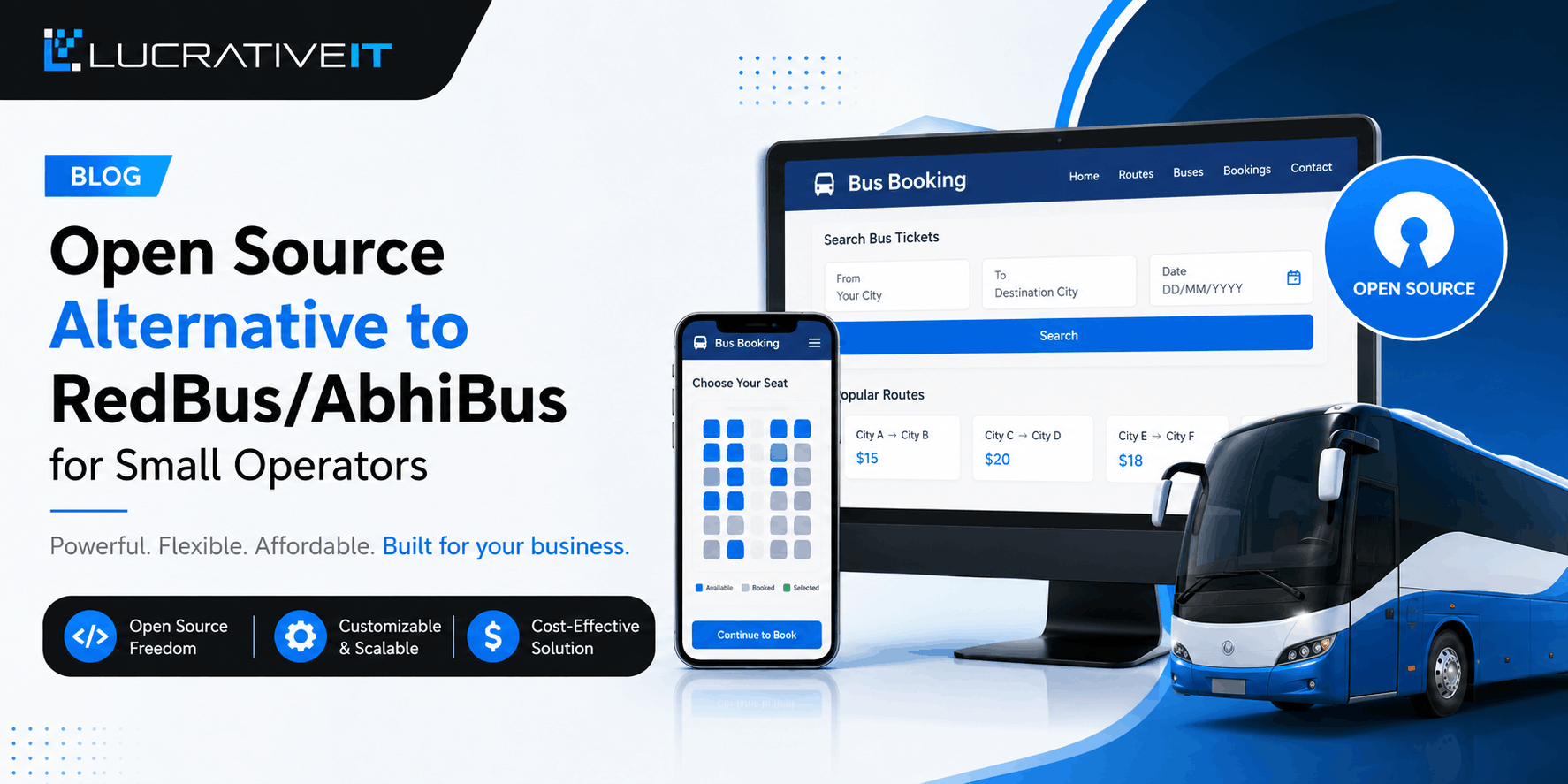
Open Source Alternative to RedBus/Abhibus for Small Operators
Every seat you sell through an aggregator hands away 10–20% of the fare. Here's how regional and small bus operators are switching to their own open source bus booking system — no commission, no dependence on someone else's app.
If you run a regional bus company, you already know the trade-off: list on an aggregator like RedBus or AbhiBus and give up a meaningful cut of every fare, or stay offline and lose the online bookings altogether. There's a third option most small operators never hear about — running your own open source bus booking system on your own website, with no per-ticket commission and no dependence on someone else's platform. This guide breaks down exactly how that works, what it costs, and how to move to it.
The Real Cost of Aggregator Commissions
Short answer: RedBus and AbhiBus typically charge bus operators a commission in the 10–20% range per ticket, often with a separate fee for their operator software on top. A self-hosted booking system replaces that recurring commission with a one-time or fixed annual software cost.
RedBus and AbhiBus built genuinely useful platforms — real-time seat maps, GPS tracking, millions of monthly travelers, and trust that took years to earn. But that convenience isn't free. Both operate on a commission-per-ticket model, and for a large national operator selling tens of thousands of seats a month, that commission buys reach they couldn't build alone.
For a small regional operator running two or three routes, it's a different story — the commission eats directly into thin margins on every single seat, every single day, indefinitely. There's no point where the cost stops; it scales with your success. The more tickets you sell, the more you pay.
Quick math: On a ₹500 average fare with a 15% commission, an operator selling 3,000 seats a month pays roughly ₹2,25,000 in commissions — every month, forever, on top of any separate software fee. Over a year, that's well into seven figures for a small operator.
What an Open Source Bus Booking System Actually Is
An open source bus booking system is booking software whose source code you can install, own, and run on your own server — instead of renting access to someone else's platform. In practice, this means:
This isn't a niche or experimental approach — it's the same model that's already powered independent hotels, event organizers, and service businesses moving off booking marketplaces once their volume justified owning the infrastructure. Bus ticketing is simply catching up.
Why This Matters Most for Regional Operators
Large operators can absorb aggregator commissions because their volume and brand recognition make the trade-off worthwhile. Small and regional operators are in the opposite position:
Thinner Margins
A 15% commission on a ₹400 fare is a much bigger hit relative to fuel, driver wages, and maintenance than it is for a fleet running hundreds of buses.
Loyal, Repeat Riders
Regional routes often have the same passengers booking week after week — exactly the audience that's cheapest and easiest to move to direct booking.
Less Need for "Discovery"
If passengers already know your route and schedule, you don't need a marketplace to be found — you need a fast, trustworthy way for them to book directly.
Predictable Costs
A fixed software cost is far easier to budget around than a commission that grows every time business improves.
None of this means aggregators are useless — many operators run both channels side by side. But relying on one as your only booking channel means an ongoing tax on every fare you sell, indefinitely. Owning your booking system doesn't require leaving aggregators entirely; it means no longer being dependent on them.
Features a Small Operator Actually Needs
Not every open source booking script is built for real-world bus operations. Before choosing one, confirm it covers the fundamentals:
This is exactly the gap BusTicket Plus is built to close — a self-hosted, Laravel 12 bus booking system with a drag-and-drop seat builder, six seat-layout presets, route and trip scheduling, four payment gateways (Cash, Stripe, Razorpay, SSLCommerz), PNR ticketing, and a five-step web installer that doesn't require a developer to get running.
Aggregator vs. Self-Hosted: Side-by-Side
| Factor | Aggregator (RedBus/AbhiBus) | Self-Hosted (BusTicket Plus) |
|---|---|---|
| Per-ticket cost | ~10–20% commission, ongoing | No commission — hosting cost only |
| Software cost | Often a separate operator software fee | From $49/year, or $199 one-time (lifetime) |
| Branding | Your listing sits inside their marketplace | Fully your brand, your domain |
| Customer data | Held by the platform | Stored in your own database |
| Source code access | None | Full Laravel source code included |
| Setup effort | Sign up, list routes | 5-step installer, live in under an hour |
| Best for | Reach and discovery for unknown routes | Repeat local customers, direct branding, long-term margin protection |
How to Move Off Aggregators Without Losing Bookings
You don't need to cancel your aggregator listings on day one. A realistic transition looks like this:
- Install your booking system first. Set up routes, seat layouts, and payment gateways on your own domain while your aggregator listings stay live.
- Redirect repeat customers to book directly. A simple SMS/WhatsApp message to regulars ("book directly and skip the booking fee") often converts a meaningful share of your most loyal riders immediately.
- Add a "Book Now" link everywhere. Your bus stands, printed tickets, driver announcements, and social media — anywhere passengers already trust you.
- Keep the aggregator listing for new-route discovery. Let the marketplace do what it's good at — reaching passengers who don't know you yet — while your own site absorbs the growing share of repeat bookings.
- Track the shift. Your admin dashboard shows direct bookings growing month over month, so you can see commission savings accumulate in real numbers.
Frequently Asked Questions
Is an open source bus booking system really free?
The software itself is typically low-cost or one-time — BusTicket Plus starts at $49/year or $199 lifetime — and you'll pay for hosting, usually a few dollars a month. There's no ongoing per-ticket commission, which is the main cost difference versus an aggregator.
Do I need a developer to set it up?
No. BusTicket Plus ships with a 5-step web installer that checks server requirements, connects your database, and sets up your admin account — day-to-day operation is entirely through the dashboard.
Can I still list on RedBus or AbhiBus after switching?
Yes — most operators run both. Your own booking site absorbs repeat, direct bookings at no commission, while aggregators continue driving new-passenger discovery.
What payment methods can passengers use?
BusTicket Plus supports cash (pay on boarding), Stripe, Razorpay, and SSLCommerz, with multi-currency support — so you can match how your regional passengers actually prefer to pay.
Related Topics
Stop Paying Commission on Every Seat You Sell
BusTicket Plus gives regional and small bus operators their own booking website — visual seat selection, fleet management, PNR tickets, and multi-gateway payments — for a one-time cost instead of a lifelong commission.
Watch Live Demo View Pricing & BuyMore articles
Continue reading
Bus
How to Start an Online Bus Ticket Booking Business (2026 Guide)
Everything you need to launch an online bus ticket booking business in 2026 — market research, licensing, fleet decisions, booking software, payments, and marketing, step by step.